
Date 16 Feb 2026
Women rarely talk openly about intimate health concerns. Many silently adjust their lives around discomfort. They avoid certain clothes, skip workouts, and feel embarrassed about leakage. They hesitate in relationships. And most of the time, they tell themselves, “This is just part of childbirth or aging.”
But here’s something important to remember. Not every change is something you have to live with. Today, modern gynecology offers safe and medically guided treatments that can improve comfort and quality of life. One such option is vaginoplasty.
In this guide, you’ll understand when to consider vaginoplasty, how to recognize the signs you need vaginoplasty, and what happens during a vaginal tightening consultation so you can make an informed decision without fear.
Let’s start with the basics.
Vaginoplasty is a surgical procedure that repairs and tightens stretched vaginal tissues and pelvic floor muscles.
It is not just cosmetic. In many cases, it is functional surgery that helps improve everyday comfort and bladder control.
Doctors usually recommend it for women who have:
Muscle separation after childbirth
Vaginal laxity with age
Pelvic floor weakness
Structural damage from tears or trauma
During the procedure, the surgeon tightens muscles, removes excess tissue, and restores proper support. The result is better strength, better control, and better comfort.
To understand when to consider vaginoplasty, it helps to know why changes happen in the first place.
The vaginal canal is supported by pelvic floor muscles, just like your core muscles support your abdomen. These muscles stretch and contract every day. But repeated stress can weaken them over time.
Here are the most common reasons:
Pregnancy and vaginal delivery can place intense strain on the pelvic muscles. Multiple deliveries, large babies, assisted births, or tears can overstretch tissues beyond natural recovery. Even after healing, strength may not fully return.
As women grow older, estrogen levels drop. Because of which tissues become thinner and less elastic. Muscle tone gradually decreases, leading to reduced support and firmness.
Significant weight gain increases constant pressure on the pelvic floor, while rapid weight loss may reduce muscle strength. Both can weaken support over time.
Chronic constipation, heavy lifting, persistent coughing, or high-impact activities create repeated downward pressure that slowly stretches pelvic tissues.
Read More- Vaginoplasty vs. Vaginal Rejuvenation: Understanding the Difference Before You Decide
Vaginal changes happen slowly. It’s not always easy to know what’s normal and what needs medical care. That’s why paying attention to symptoms is important.
If you notice the following, it may be time to think about when to consider vaginoplasty or schedule a vaginal tightening consultation.
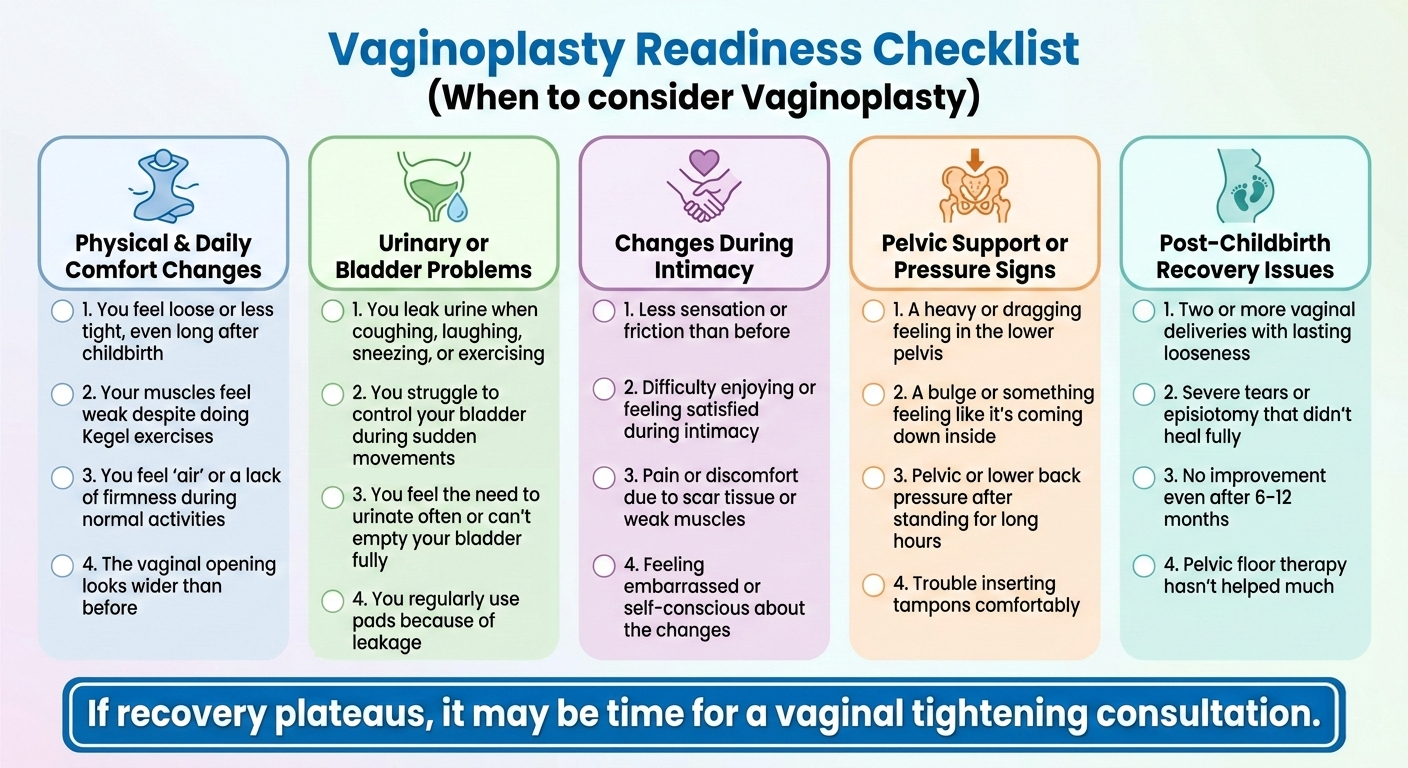
If you notice several of these issues in your daily life, it may be time to book a vaginal tightening consultation.
✔ Constant feeling of looseness
✔ Urine leakage during activities like laughing or running
✔ Less sensation during intimacy
✔ Heavy or dragging feeling in the pelvis
✔ Pain or discomfort during intercourse
✔ No improvement even after exercises
If you tick three or more, these are strong signs you need vaginoplasty or at least a proper medical check-up.
More to Read- Postpartum Vaginal Care: What No One Tells You
Many women feel nervous or shy before this appointment. That’s completely normal. esitation, uncertainty, or even embarrassment about discussing intimate concerns. But in reality, the visit is simple, private, and professional, just like any other women’s health check-up.
The goal is not to push surgery. It’s to understand your symptoms and guide you toward the safest and most suitable treatment. Here’s what usually happens.
First, you’ll have a normal conversation. The doctor will ask about your health and experiences to understand what might be causing the problem.
They may ask about:
Number of deliveries
Type of delivery (normal or assisted)
Current symptoms like looseness or leakage
Past surgeries or tears
Hormonal changes or menopause
This helps them figure out whether the issue is related to muscles, tissue support, or hormones.
Next, there’s a short physical check-up. It’s done carefully and respectfully, keeping your comfort in mind.
The doctor checks:
Pelvic floor muscle strength
Tissue tightness and elasticity
Vaginal tone
Any signs of prolapse or weakness
This shows how serious the laxity is and whether non-surgical options may help.
After the exam, the doctor explains everything clearly and simply.
You may discuss:
Pelvic floor exercises
Physiotherapy
Laser or RF treatments
Hormonal support
Surgery (only if really needed)
You’ll also learn about recovery time, risks, and what results to expect, so you can decide comfortably, without pressure.
Also Read - The Science Behind Non-Surgical Vaginal Rejuvenation: How Radiofrequency and Lasers Work
Your body changes with time and that’s completely natural.
But living with constant discomfort, urine leakage, or low confidence is not something you have to accept as normal. These problems shouldn’t quietly become a part of your daily life.
If you keep noticing symptoms that don’t go away, pay attention. Your body is trying to tell you something.
Understanding when to consider vaginoplasty, recognizing the signs you need vaginoplasty, and seeking a professional vaginal tightening consultation can help you understand your options and choose what’s right for you in a safe and informed way.
If you want clear answers and expert care, you can consult the specialists at Eternelle Aesthetics. Our team offers honest guidance, personal evaluations, and treatment plans focused on your comfort and health.
Because at the end of the day, you deserve to feel comfortable, confident, and like yourself again.
If pelvic exercises don’t improve laxity, leakage, or discomfort, these may be signs you need vaginoplasty. A specialist evaluation can confirm suitability.
No. It often treats functional issues like urinary incontinence, prolapse, and muscle weakness.
There’s no fixed age. Many women seek it between 30–50 after childbirth or menopause-related changes.
Most daily activities resume in 7–10 days. Full recovery takes about 8–12 weeks.
Yes. A vaginal tightening consultation ensures correct diagnosis and helps decide when to consider vaginoplasty safely.