
Date 25 Jun 2026
Medically Reviewed By
Dr. Maalavika Appasani — MS Obstetrics/Gynaecologist, Aesthetic & Functional Gynaecologist, Laparoscopic Surgeon
|
Hormones are chemical messengers that tell different parts of the body how to function. They help regulate the menstrual cycle, oil production, metabolism, appetite, hair growth, mood, sleep, energy, and many other internal processes. When these messengers are balanced, the body usually functions smoothly. But when hormone levels rise, fall, or become irregular, the effects may appear on the skin, hair, and weight before a person fully understands what is happening internally.
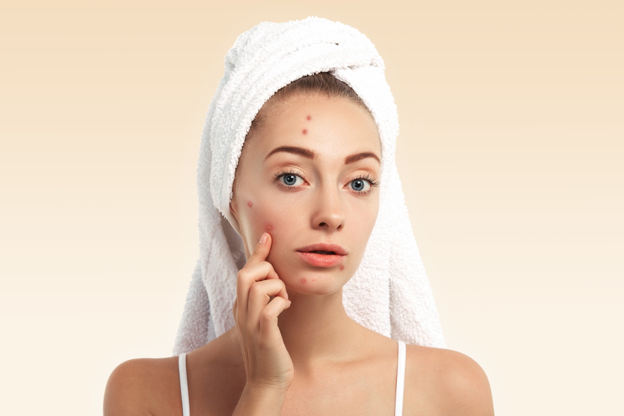
Image Credit: Magnific
For many women, this can feel frustrating. Acne may keep returning despite a good skincare routine. Hair may start thinning even after using expensive products. Weight may increase even when food habits have not changed much. These changes are often dismissed as stress, aging, or lifestyle issues, but mostly, they are connected to hormonal changes.
Understanding hormonal imbalance symptoms in women is important because the body often gives early signs. They are signals that the body may need medical attention, lifestyle support, and a more holistic approach.
Hormonal imbalance happens when the body produces too much or too little of certain hormones. In women, hormones such as estrogen, progesterone, insulin, thyroid hormones, cortisol, and androgens can influence skin, hair, and weight.
Some hormonal changes are natural. Puberty, periods, pregnancy, postpartum changes, perimenopause, and menopause can all affect hormone levels. However, persistent symptoms may point to conditions such as PCOS, thyroid disorders, insulin resistance, high stress-related cortisol, or other endocrine concerns.
PCOS, for example, is a common hormonal disorder. The World Health Organization states that PCOS affects an estimated 10–13% of women of reproductive age, and many women remain undiagnosed. It can involve irregular periods, higher androgen levels, acne, excess facial or body hair, and ovulation-related concerns.
The skin is highly responsive to hormonal activity. Hormones influence oil glands, inflammation, collagen, pigmentation, and skin barrier function. When hormones fluctuate, the skin may become oily, acne-prone, dull, dry, sensitive, or uneven in tone.
One of the most common concerns is acne. The causes of hormonal acne are often linked to changes in androgens, which can increase sebum production. When excess oil mixes with dead skin cells and bacteria, pores become clogged and acne develops.
Hormonal acne often appears around the jawline, chin, cheeks, neck, chest, or back. It may worsen before periods, during stressful phases, after stopping certain medications, or with PCOS. Unlike occasional pimples, hormonal acne may feel deep, painful, cystic, and repetitive.
Common hormonal acne causes may include:
For women with PCOS, skin symptoms can be more persistent. PCOS skin and hair symptoms may include acne, oily skin, increased facial hair, scalp hair thinning, and sometimes darkened skin patches around the neck or underarms. The early signs of PCOS may include acne, thinning scalp hair, facial or body hair growth, and weight gain.
This is why treating only the surface may not always be enough. Creams, cleansers, and facials may help manage breakouts, but if the root issue is hormonal, the acne may keep returning until the internal trigger is addressed.
Doctor's Note
Hormonal acne is frequently mismanaged because it is treated as a skincare problem rather than an internal one. Many women spend years on topical routines that offer only partial relief. When recurring acne appears along the jawline, chin, or neck — especially around the menstrual cycle or in the context of PCOS — a hormonal evaluation is far more informative than adding another serum to the routine. Addressing the root cause gives much more sustainable results.
Experiencing recurring acne, hair thinning, or unexplained weight changes?
At Eternelle Aesthetics, Hyderabad, our specialists can help evaluate your symptoms, identify hormonal patterns, and recommend a personalised treatment plan for your skin, hair, and overall well-being.
Book a Consultation →Hair growth is also hormone-sensitive. A healthy hair cycle includes growth, resting, shedding, and regrowth. Hormonal changes can disturb this cycle and push more hair into the shedding phase.
Hormonal hair loss can appear in different ways. Some women notice sudden shedding while washing or combing. Others see widening of the hair partition, reduced ponytail thickness, or thinning around the crown. In some cases, hair growth may increase on the face while scalp hair becomes thinner. This pattern is commonly seen when androgen levels are high.
In PCOS, excess androgen activity may contribute to both unwanted facial hair and scalp thinning. That is why PCOS skin and hair symptoms can feel emotionally difficult. A woman may be dealing with acne, facial hair growth, and scalp hair fall at the same time.
Hormonal hair loss may also happen after pregnancy, during thyroid imbalance, during perimenopause, after sudden weight loss, or during prolonged stress. Thyroid hormones are especially important for hair growth. Both hypothyroidism and hyperthyroidism can contribute to hair thinning if not managed properly.
It is important to understand that hormonal hair loss is not a cosmetic failure, but often a biological response. Hair supplements may support nutritional gaps, but they may not fully solve the issue if the underlying cause is PCOS, thyroid imbalance, low iron, vitamin deficiency, or androgen excess.
A doctor may suggest blood tests such as thyroid profile, vitamin D, B12, ferritin, insulin markers, androgen levels, and reproductive hormones depending on the symptoms.
Many women feel blamed for weight gain, especially when they are told to "just eat less and exercise more." But weight regulation is more complex than willpower. Hormones influence hunger, cravings, fat storage, water retention, energy levels, blood sugar control, and metabolism.
Image Credit: Magnific
Weight gain due to hormones may happen when insulin, thyroid hormones, cortisol, estrogen, or androgens are not functioning optimally. For example, insulin resistance can make it harder for the body to use glucose efficiently. As a result, the body may store more fat, especially around the abdomen. PCOS is commonly associated with insulin resistance, although not every woman with PCOS gains weight.
Thyroid imbalance can also affect weight. When thyroid function is low, metabolism may slow down. This can lead to fatigue, water retention, constipation, and gradual weight gain. High stress can also contribute because cortisol may increase cravings, disturb sleep, and encourage abdominal fat storage in some people.
In PCOS, weight gain due to hormones can be connected to insulin resistance, androgen imbalance, irregular ovulation, and inflammation. However, it is also important to remember that lean women can have PCOS too. Weight is only one part of the picture.
PCOS is one of the most common reasons women experience skin, hair, and weight changes together. PCOS skin and hair symptoms often overlap with metabolic symptoms, which is why the condition can feel overwhelming.
A woman with PCOS may notice acne, irregular periods, unwanted facial hair, scalp thinning, weight gain, sugar cravings, fatigue, mood changes, and difficulty losing weight. These are common hormonal imbalance symptoms in women, but the pattern may vary from person to person.
The diagnosis of PCOS is usually based on a combination of signs such as androgen excess, ovulation irregularity, and polycystic ovarian appearance, while also excluding similar conditions such as thyroid disease or high prolactin.
This is why self-diagnosis can be misleading. Acne and weight gain may look like lifestyle issues from the outside, but medically, they may need hormone testing and proper assessment.
Doctor's Note
PCOS presents differently in every woman, and the overlap of skin, hair, weight, and menstrual symptoms can make it easy to misattribute what is happening. Many patients come to us after years of managing acne with skincare or weight gain with diet, without realising the common hormonal thread connecting all three. A structured hormonal evaluation and an integrated care plan — one that looks at the whole picture — tends to give far better outcomes than treating each symptom in isolation.
It may be time to consult a dermatologist, gynecologist, or endocrinologist if symptoms are persistent, worsening, or affecting confidence and daily life.
You should consider medical evaluation if you notice:
Hormonal imbalance symptoms in women should be approached with care, not panic.
Management depends on the cause. There is no one-size-fits-all solution. For some women, lifestyle changes may help significantly. For others, medical treatment is needed.
A doctor may recommend skincare treatment for acne, hair loss therapies, nutrition correction, thyroid medication, insulin-sensitizing support, hormonal medicines, or PCOS-specific management. Lifestyle changes such as balanced meals, strength training, better sleep, stress management, and reducing ultra-processed foods can also support hormone health.
Hormonal imbalance can affect the body in deeply visible and emotional ways. Acne, hair loss, facial hair growth, irregular periods, and unexplained weight gain can make a woman feel uncomfortable in her own skin. But these symptoms are not signs of failure. They are signs that the body may be asking for attention. Recognizing hormonal imbalance symptoms in women early can help prevent years of confusion.
Get a Professional Diagnosis and Personalised Care Plan at Eternelle Aesthetics
Consult with the experts at Eternelle Aesthetics, Hyderabad, for a professional diagnosis, root-cause evaluation, and a personalised care plan that supports your skin, hair, weight, and overall well-being.
Book Your Consultation →Medically reviewed by Dr. Maalavika Appasani, MS Obstetrics/Gynaecologist, Aesthetic & Functional Gynaecologist, Laparoscopic Surgeon, Eternelle Aesthetics, Hyderabad.
Common hormonal imbalance symptoms in women include irregular periods, acne, hair thinning, sudden weight gain, fatigue, mood swings, sleep issues, excessive facial hair, and changes in appetite or energy levels.
Yes. Hormonal acne can happen even when the skincare routine is consistent. This is because the root cause may be increased oil production, androgen changes, PCOS, stress, or menstrual cycle fluctuations rather than poor skincare.
Hair loss may be hormonal if it appears as widening of the hair part, thinning around the crown, sudden shedding, or hair fall along with irregular periods, acne, facial hair growth, thyroid issues, or PCOS symptoms.
Hormones can affect metabolism, appetite, insulin sensitivity, fat storage, water retention, and energy levels. Conditions such as PCOS, thyroid imbalance, insulin resistance, and chronic stress may contribute to weight gain due to hormones.
You should consult a doctor if acne keeps returning, hair shedding is excessive, periods are irregular, weight gain is unexplained, facial hair growth increases, or symptoms affect your confidence and daily life.