Date 17 Feb 2026
Hair loss affects a large portion of the adult population, especially those with pattern baldness, yet many misconceptions still surround its treatment. In the latest video, Dr. Sunaina from Eternelle Aesthetics, discusses hair transplantation in detail. She covers the procedure, its two main methods (FUE and FUT), the ideal candidates, post-operative care, and the timeline for seeing results. She also clarifies who is qualified to perform the procedure.
A hair transplant procedure is a surgical technique used to restore hair in areas of thinning or baldness. The process involves extracting hair follicles from a region of the scalp that still has adequate density, usually the back or sides, and implanting them into areas where hair is sparse or absent.
The transplanted follicles retain their original genetic characteristics. Because of this, they continue to grow even after being relocated. The procedure is primarily used for androgenetic alopecia, commonly known as pattern baldness.
Although effective in appropriate candidates, a hair transplant not suitable for everyone. Patients must undergo proper medical evaluation to determine candidacy.
There are two primary surgical techniques used worldwide. Understanding FUE vs FUT hair transplant is important for making an informed decision.
1.) FUE (Follicular Unit Excision)
In FUE, individual follicular units are extracted directly from the donor area using a micro-punch device, typically less than one millimeter in diameter.
Key characteristics:
No linear scar
Minimal postoperative discomfort
Faster recovery time
Suitable for patients who prefer short hairstyles
Because extraction occurs one unit at a time, the procedure can be time-intensive, especially when a large number of grafts are required.
2.) FUT (Follicular Unit Transplant)
In FUT, a thin strip of scalp is surgically removed from the donor region. This strip is then dissected into individual follicular units under magnification before implantation.
Key characteristics:
Allows harvesting of a large number of grafts in one session
Leaves a linear scar at the donor site
May be preferred for advanced baldness requiring extensive coverage
When comparing FUE Vs. FUT hair transplant, the choice depends on baldness severity, donor density, scalp laxity, and patient preference. Both techniques use local anesthesia and are generally painless during the procedure.
Also Read- FUE Hair Transplant: Benefits, Process & Recovery
|
Comparison Factor
|
FUE (Follicular Unit Excision)
|
FUT (Follicular Unit Transplant)
|
|
Harvesting Method
|
Individual follicles extracted using micro-punch
|
Strip of scalp removed and dissected into grafts
|
|
Scarring
|
No linear scar; tiny dot scars
|
Linear scar at donor site
|
|
Number of Grafts per Session
|
Moderate; may require multiple sessions for large areas
|
High yield in a single session
|
|
Recovery Time
|
Faster healing and earlier return to routine
|
Slightly longer recovery due to surgical incision
|
|
Postoperative Discomfort
|
Minimal discomfort
|
Mild to moderate discomfort at donor site
|
|
Suitability for Hairstyles
|
Suitable for short haircuts
|
Linear scar may limit very short hairstyles
|
|
Best Indications
|
Early to moderate baldness, patients preferring minimal scarring
|
Advanced baldness requiring maximum coverage
|
Hair transplantation produces the best outcomes when performed on properly selected patients. Several medical and anatomical factors determine eligibility.
Ideal candidates typically include:
Individuals with pattern baldness
Patients with stable hair loss
Those with adequate donor hair density
Individuals in early to moderate stages of baldness
Patients without active scalp infections
Adults usually above 20 years of age
Patients with uncontrolled systemic illnesses such as diabetes or hypertension may not be suitable until the condition is medically stabilized.
It is important to understand that a hair transplant is not suitable for everyone. Diffuse hair loss, autoimmune conditions, or inadequate donor supply may limit success.
Although success rates are high when performed correctly, complications or poor outcomes can occur. Understanding hair transplant failure reasons helps patients set realistic expectations.
Common causes include:
Poor surgical technique
Inadequate donor hair quality
Advanced baldness with insufficient grafts
Improper postoperative care
Infection or poor wound healing
Continued progression of hair loss
Selecting a qualified specialist and following instructions carefully significantly reduces the risk of failure. Many hair transplant failure reasons are preventable with proper planning and medical supervision.
The hair transplant procedure follows a structured surgical protocol:
Preoperative evaluation and planning: The surgeon assesses medical history, pattern and stability of hair loss, scalp condition, and donor area density. Blood tests or clearance for conditions like diabetes or hypertension may be required. Photographs and graft estimates are taken to plan realistic coverage.
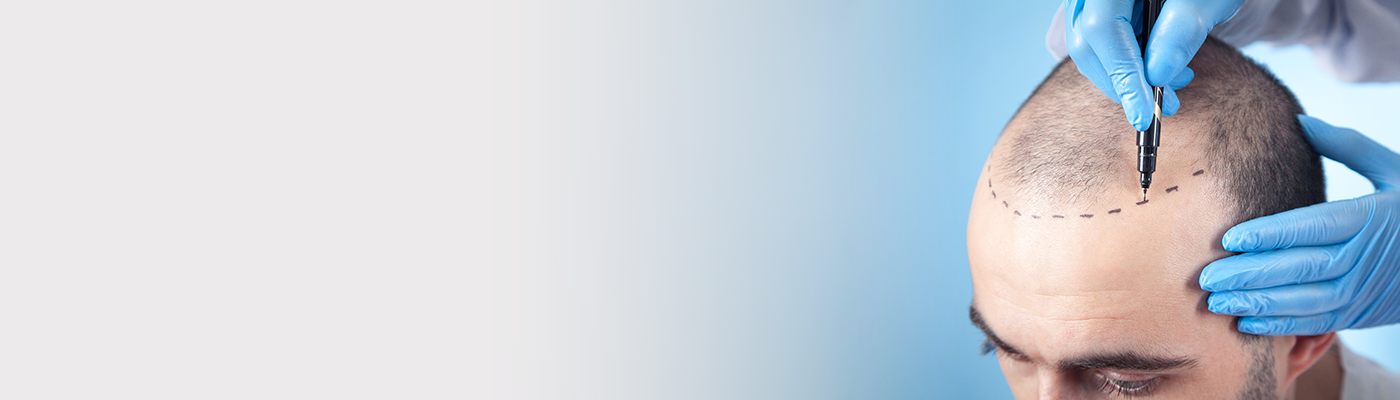
Design and marking of hairline and recipient zones: A natural hairline is carefully drawn considering age, facial proportions, ethnicity, and future hair loss progression. This step determines the final aesthetic outcome.
Administration of local anesthesia: The donor and recipient areas are numbed using injectable local anesthetic. Patients remain awake but pain-free throughout the procedure.
Harvesting of donor follicles (FUE or FUT): Follicles are extracted individually in FUE or as a strip in FUT from the back or sides of the scalp.
Graft preparation under magnification: Technicians separate and sort grafts to preserve follicle viability.
Creation of recipient sites: Tiny incisions are made at specific angles and densities to mimic natural hair growth.
Implantation of follicles: Grafts are placed into the prepared sites with precision.
Procedure duration: Surgery typically lasts 4 to 8 hours or longer depending on graft count.
The entire process can take several hours depending on the number of grafts.
Proper postoperative care is essential for graft survival and optimal healing.
1.) First Three Days
Patients are advised to:
Avoid bending forward or sudden movements
Refrain from washing hair
Use prescribed saline spray every one to two hours
Avoid touching or scratching the scalp
A head wash is usually performed at the clinic on the third day, along with the removal of donor area dressing.
2.) First Ten Days
During this period:
Patients should not wash hair independently
No topical serums should be applied
A protective surgical cap may be used as instructed
Another supervised head wash is typically performed around the tenth day.
Timeline of Results
Hair transplantation requires patience. Immediate cosmetic improvement should not be expected.
First Month
Healing of implanted sites occurs
Scabs fall off naturally
Medications such as minoxidil may be restarted
One to Two Months
The transplanted hair shafts usually shed. This phase is normal and part of the growth cycle.
Two to Three Months
New hair growth begins as fine stubble.
Six Months
Noticeable improvement in density appears.
One Year
Full results are typically visible. Hair becomes thicker and more natural in appearance.
Hair transplantation is a surgical procedure and must be performed by appropriately trained medical professionals.
According to Indian medical guidelines, only the following specialists are qualified:
Dermatologists with MD or DNB qualification
Plastic surgeons
Procedures performed by unqualified personnel increase the risk of complications, poor aesthetic outcomes, and graft loss. This is another important factor behind preventable hair transplant failure reasons.
Before deciding on surgery, patients should understand key limitations.
A hair transplant not suitable for everyone
Surgery does not stop ongoing hair loss
Additional procedures may be required in the future
Donor hair is a limited resource
Comprehensive consultation helps determine whether the benefits outweigh the risks.
Hair transplantation is an effective solution for restoring hair density in selected patients with pattern baldness. The outcome depends on technique selection, surgeon expertise, donor quality, and adherence to postoperative care.
Understanding the hair transplant procedure, differences in FUE Vs FUT hair transplant, realistic timelines, and potential hair transplant failure reasons allow patients to make informed decisions. For a personalized assessment and expert guidance, consult the specialists at Eternelle Aesthetics, who will provide thorough evaluations and tailored treatment plans to help you achieve safe and natural-looking results.
(Schedule a consultation)
No. The procedure is performed under local anesthesia. Patients may feel mild discomfort after surgery, which is manageable with prescribed medication.
It typically takes 4 to 8 hours depending on the number of grafts and whether FUE or FUT technique is used.
New growth usually begins around 8 to 12 weeks after shedding of transplanted hair. Full results take about 12 months.
Yes. Transplanted hair follicles are resistant to pattern baldness and generally continue growing for life, although native hair may continue to thin.
No. A hair transplant is not suitable for everyone. Patients with poor donor density, unstable hair loss, or certain medical conditions may not qualify.